
California’s effort to build a comprehensive behavioral health crisis response system is entering a new phase of accountability. Assembly Bill 988 (Bauer-Kahan, 2022), the law that established and funded California’s 988 Suicide and Crisis Lifeline, has been selected for a formal legislative Outcomes Review as part of a new initiative to evaluate how effectively recently enacted policies are working in practice.
The review will focus on implementation: what’s working, where gaps remain, and what it will take to ensure Californians in crisis can access the right care at the right place and time.
What is the Outcomes Review Oversight Project?
Developed by Assembly Speaker Robert Rivas, the Outcomes Review Oversight Project reflects a simple premise: passing a bill is only the beginning. The real measure of success is whether implementation leads to better access to care, improved outcomes, and more coordinated systems.
The project selects recently enacted laws for in-depth analysis to understand what is working, what is not, and what changes are needed. Through hearings, data analysis, and stakeholder input, Assemblymembers will assess whether these laws are achieving their goals and identify opportunities to improve performance.
AB 988 is one of a limited set of laws chosen for this process, underscoring both its significance and the complexity of implementing a statewide crisis response system.
Why AB 988 was selected
AB 988 represents one of California’s most ambitious behavioral health implementation efforts in recent years. Since its launch, use of 988 has increased each year as public awareness grows and more people turn to it as an entry point to crisis care.
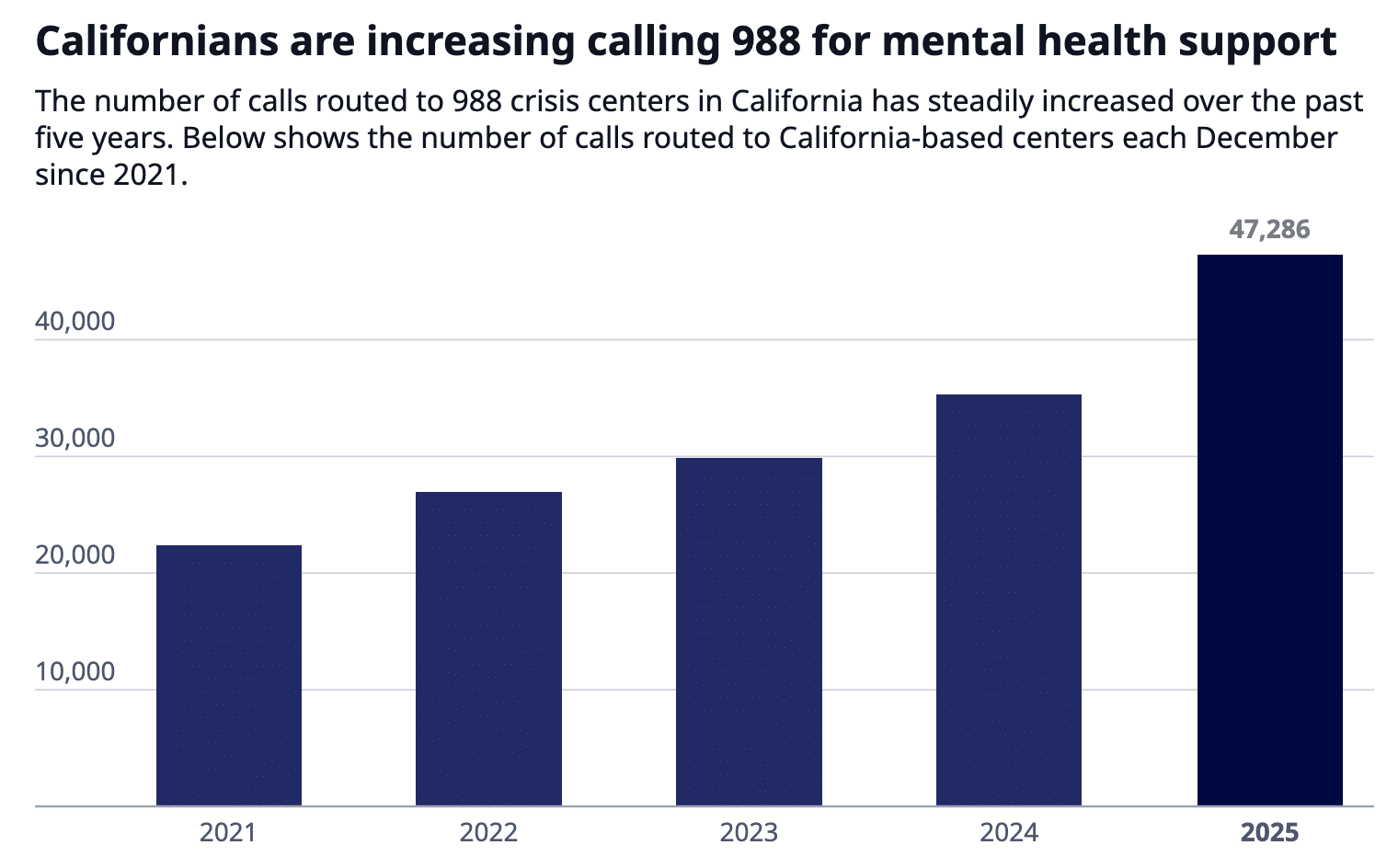
But implementation challenges have emerged since the law’s passage in 2022, limiting the lifeline’s ability to reach its full potential. The Sacramento Bee reports that growing demand for 988 services, limited and unstable funding for crisis centers, and ongoing coordination challenges between 988 and 911 are straining the system and slowing its ability to fully meet need statewide. In A Blueprint for California’s Behavioral Health Future – Strategic Actions for the Governor’s Final Year, the Steinberg Institute outlined several actions to improve 988 implementation, including establishing a 988 governance structure and improving budget processes for 988 call centers and mobile crisis team operators.
AB 988 is central to the transformation of California’s crisis response system, and its implementation directly affects how the state responds to behavioral health emergencies. Examining its performance is essential to ensuring the system we are building is effective, humane, and equitable.
The role and evolution of 988 in California’s crisis response system
The 988 Suicide and Crisis Lifeline launched nationwide in July 2022, replacing the longer National Suicide Prevention Lifeline number with a simple three-digit code accessible by call, text, or chat. Its purpose was clear: make it easier for people experiencing a mental health or substance use crisis to connect with trained counselors and local support.
But California recognized that a phone call alone is not enough. Transforming crisis care requires local infrastructure to ensure there is someone to call, someone to come, and somewhere to go when people need help.
In 2022, California took that next step by passing AB 988, co-sponsored by the Steinberg Institute. Building on the federal launch of 988, the legislation established a sustainable funding and policy framework to strengthen the lifeline and develop the broader crisis response infrastructure around it. It outlines a five-year implementation plan to expand call center capacity, build out mobile crisis response teams, and improve coordination across systems—shifting crisis response toward a health-centered, integrated continuum of care.
At its core, AB 988 represents a structural shift away from reliance on emergency rooms and law enforcement and toward coordinated, community-based care. Realizing that shift, however, depends on effective implementation over time.
From policy to outcomes: What comes next
California has made significant investments in behavioral health infrastructure, and counties and providers are actively implementing new programs. At the same time, future funding uncertainty—including the expiration of enhanced federal Medicaid support in 2027—adds urgency to strengthening and sustaining crisis response capacity.
The next phase is about performance and accountability: ensuring the crisis system functions as intended across the state and reaches communities equitably. AB 988 laid the foundation for a more health-centered response to behavioral health crises. The Outcomes Review provides a chance to refine that foundation—aligning policy, implementation, and outcomes so the system delivers on its promise: when someone reaches out in crisis, they receive timely, compassionate, and appropriate support.
If you or someone you care about is facing a mental health crisis, call or text 988 for support.