Turning dialogue into direction for California's behavioral health system
California is in the midst of an unprecedented behavioral health systems transformation. Historic reforms such as Proposition 1 and CalAIM present a once-in-a-generation opportunity to build a true continuum of care for all who need it. Since 2016, our behavioral health investments have nearly tripled, with over $17 billion invested in FY 2024-25. At the same time, an ongoing workforce shortage, federal funding cuts, a state budget shortfall, and a persistent homelessness crisis threaten to stall progress.
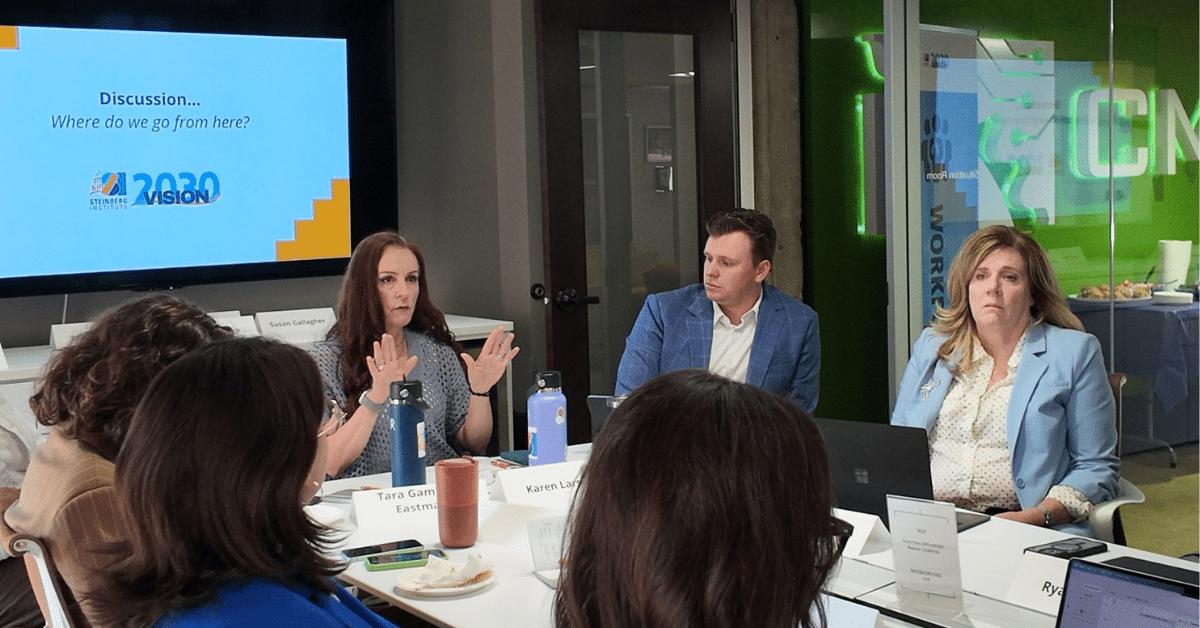
It was this inflection point that inspired the Steinberg Institute to launch the Vision 2030: Ideas to Action Convening Series—an effort to bring together those closest to the work, and those most affected by it, to shape a shared path forward.
About the Ideas to Action Convening Series
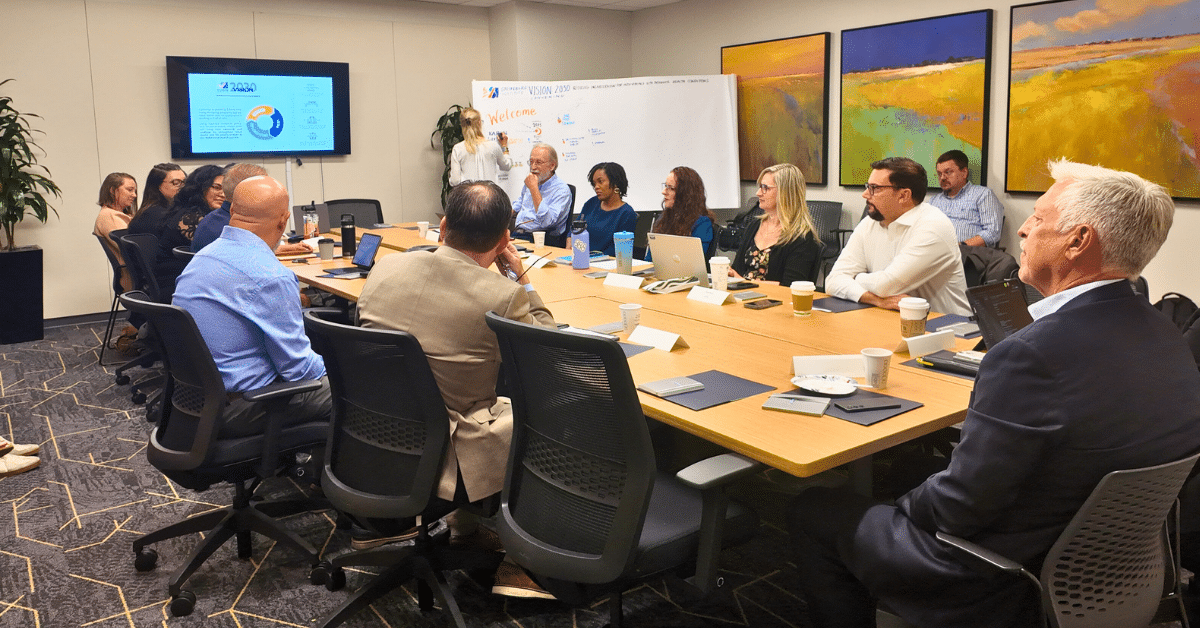
The Steinberg Institute’s Ideas to Action Convening Series brings together leaders from across sectors—including policymakers, providers, advocates, philanthropy, and individuals with lived experience—to turn dialogue into direction.
The goal: surface near-term, practical solutions that can inform legislative and administrative action. Participants examine barriers, share promising practices, and identify opportunities to align policy, funding, and practice to achieve lasting systems change.
2025 Ideas to Action Convenings
In 2025, the Institute hosted four convenings, each focused on one of Vision 2030’s four objective areas: Workforce, Homelessness, Incarceration, and Hospitalization. Explore the outcomes from these convenings here.
Participant Organizations
MAY 13, 2025
Building a Stronger Behavioral Health Workforce for California
State leaders, providers, researchers, and innovators to confront one of California’s most urgent challenges: building and sustaining the workforce that will power behavioral health reform. Participants explored how technology, team-based care, and peer career pipelines can strengthen a system strained by shortages and administrative burdens.
Participants identified ways to build a workforce that is more resilient, connected, and reflective of the communities it serves, with shared excitement around scaling innovations that reduce burnout and create new entry points for peers and lived-experience professionals.
AUGUST 14, 2025
Behavioral Health Solutions for California’s Unhoused
Policymakers, researchers, service providers, and public health leaders explored how California can better connect people experiencing homelessness with treatment, housing, and recovery supports. The discussion centered on creating a more coordinated system that bridges behavioral health and housing—one that offers care continuity regardless of a person’s living situation.
Participants examined strategies to improve coordinated entry, substance use treatment, expand presumptive eligibility, and build integrated data systems linking housing and behavioral health services.
Participant Organizations
Participant Organizations
SEPTEMBER 14, 2025
Behavioral Health Alternatives to Incarceration
Justice reform advocates, behavioral health leaders, and community-based providers, and policymakers explored how California can decriminalize behavioral health crises and strengthen diversion pathways at every stage of the justice system. Participants discussed how coordinated crisis response, integrated diversion programs, and employment equity for justice-involved individuals can collectively reduce the number of people cycling between incarceration and treatment.
The discussion reflected a shared urgency to align state and local incentives so that behavioral health needs are met with care, not custody. Leaders emphasized the role of mobile crisis teams, EMS triage, and field-based medical clearance in reducing jail as the “default bed” for people in crisis.
OCTOBER 15, 2025
Hospitalization Alternatives to Behavioral Health
This convening brought together health systems, state agencies, EMS leaders, technologists, and community providers to rework how Californians in crisis are transported, received, and supported without defaulting to the ER. The conversation centered on what it will take to scale alternative destinations, enable warm handoffs, and build stepdown capacity that prevents the “revolving door.”
With Proposition 1 and CalAIM as levers, the group aligned around practical fixes — from unified dispatch and bed visibility to clarified liability — that make a seamless crisis-to-recovery continuum achievable.
Participant Organizations
Explore the 2025 Convening Report
Our 2025 convening report captures key insights and recommendations to improve our behavioral health systems and break the cycle of homelessness, incarceration, and hospitalization for people with serious mental illness and substance use disorders — actionable ideas that will help California fully realize our transformative behavioral health initiatives.
We believe people living with serious mental illness and substance use disorders can recover – and deserve the chance to lead stable, meaningful lives. But despite billions invested, access has not improved enough, and we are unable to track meaningful outcomes for Californians living with these conditions.
In 2023 we launched Vision 2030 to address these challenges and transform California’s behavioral health system. Leveraging our role as an independent advocacy organization, we are leaning into research and implementation efforts that will drive our advocacy work and help bring desperately needed accountability to our systems.
Our goals are intentionally ambitious. Without a high bar, the state risks letting complacency prevent true progress.
Vision 2030 Goals
Build Our Workforce
Modernize and strengthen California’s behavioral health workforce to meet the diverse needs of the entire state.
Reduce Homelessness
Reduce the number of unhoused people with mental illness or substance use disorders by half.
Reduce Incarceration
Reduce the number of people with mental illness entering our criminal justice system by half.
Reduce Hospitalization
Reduce the number of people entering hospital emergency departments due to behavioral health crises by half.