
By adding a behavioral health option to 911 calls, Phoenix is evolving emergency response to better match people in crisis with the care they need.
Source: Center for American Progress
Behavioral health crises make up a growing share of 911 calls, yet emergency systems are not designed to respond to these situations. Too often, they default to police responses that can escalate a crisis—leading to potentially dangerous outcomes and leaving people in jails or emergency departments instead of connected to treatment.
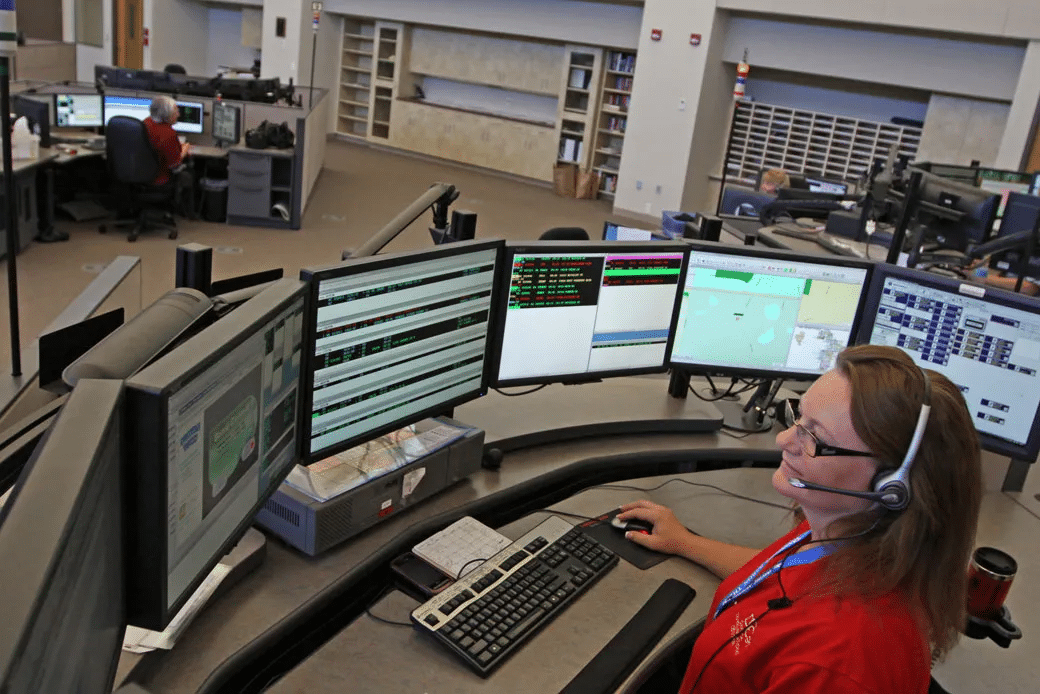
As communities work to build more coordinated crisis response systems, the City of Phoenix announced a notable update to its 911 system. As of December 15, 2025, callers now hear an additional option—alongside police and fire—that allows them to indicate a behavioral health crisis. While simple in nature, this change illustrates how emergency systems can better match response to need.
Phoenix’s new system is straightforward: once a caller identifies a behavioral health crisis, 911 dispatchers work with behavioral health professionals and community responders to triage the call and determine the most appropriate response.
Building a Safer Behavioral Health Crisis System
Research consistently shows that behavioral health crises have better outcomes when mental health professionals respond, either alongside police or instead of them. A Stanford University study found that co-responder models, in which clinicians partner with law enforcement, significantly reduced arrests and emergency department utilization.
By contrast, police-only responses can escalate crises and lead to dangerous outcomes, particularly when individuals are frightened, disoriented, or experiencing psychosis. Research from the Public Policy Institute of California found that mental health conditions were involved in nearly 60 percent of fatal police encounters in 2022, and documents both fatal and non-fatal injuries during police responses to behavioral health crises—reinforcing the need for safer alternatives.
The 988 Suicide & Crisis Lifeline, which launched nationwide in 2022, represents one of the most significant national efforts to replace a law enforcement-first approach with a public health model for behavioral health crises. As a dedicated alternative to 911 for people experiencing mental health or substance use crises, it helps ensure people in crisis are met with the right care. To underscore the impact of a more compassionate approach, California’s 988 implementation law was named in honor of Miles Hall.
While 988 has expanded access to crisis care, 911 remains a critical entry point for people in crisis. National data show that more mental health crisis calls still go to 911 rather than 988, particularly when situations feel immediate or involve a loved one. As 988 continues to be implemented across California and the country, improving how 911 identifies and routes behavioral health crises remains essential.
911 Community-Based Crisis Response Models
Phoenix’s update reflects a broader shift toward community-based behavioral health response within emergency systems. San Ramon, California and Austin, Texas have also added behavioral health options to their 911 call menus.
These approaches reflect an “embedded professional-led dispatch” model, where mental health professionals and community responders work directly with 911 dispatchers or law enforcement to determine the most appropriate response. Variations of this model have emerged across California and the country, including in San Mateo and Alameda counties.
While these models vary in structure and scale, they share a common principle: behavioral health crises require behavioral health expertise.
A Practical Step Forward
Phoenix’s new 911 option does not solve every challenge in crisis response, but it represents a practical, scalable step toward a more coordinated system. By allowing callers to identify a behavioral health crisis from the outset, 911 systems can better align resources with need—sending police when there is a public safety concern, fire or EMS when there is a medical emergency, and behavioral health professionals for a behavioral health crisis.
As states and cities continue to build out 988, crisis teams, and community-based alternatives, changes like this show how emergency infrastructure can evolve to improve outcomes. Ensuring the right people respond to the right calls is not just a matter of efficiency—it is a matter of safety, dignity, and care.
Why This Matters for California
Reducing unnecessary hospitalization and incarceration for people with serious mental illness and substance use disorders is a goal of Vision 2030, the Steinberg Institute’s framework for transforming California’s behavioral health system. When behavioral health crises are routed through police or emergency departments by default, people are more likely to be hospitalized or incarcerated rather than stabilized and connected to ongoing care.
Models that improve how 911 identifies and routes behavioral health crises can help advance this goal. By diverting crises to appropriate community-based responders, jurisdictions can reduce avoidable emergency room use, ease strain on hospitals and law enforcement, and support safer, recovery-oriented responses that treat people with dignity and compassion.