This blog is part of Perspectives, our blog series where Institute leaders, partners, and subject matter experts share their insights on the most pressing challenges—and opportunities—in behavioral health and substance use care.

There are moments when the stakes are especially high, and this is one of them for behavioral health in California.
Californians who work in our systems of care can already feel it. They are well aware of the historic funding investments flowing into the system, the sweeping policy shifts that are changing how you work, and a new governorship on the horizon that could change everything, again.
It started with new policies and programs—dozens of initiatives that represent unprecedented change in our behavioral health systems. Now, the state and counties are working on implementing these new programs effectively.
The Steinberg Institute has a significant impact on our behavioral health systems through advocacy and policy, building a legacy of legislation that has the potential to expand access and quality of behavioral health care for all Californians.
We are proud of our record. But we also know that without thoughtful implementation, even the best policies can fall short of their promise.
That’s why implementation is now a critical part of our work.
But what does impactful implementation look like, and how can we ensure the current transformation initiatives work as intended?
Critical elements of good implementation
More than two decades of working in California county systems have taught me invaluable lessons on what it takes for policy and program implementation to be successful.
When I think of what good implementation looks like, my mind immediately jumps to a project early on in my local government career as an analyst for a mid-sized county in California.
Our community had a large and very entrenched riverbank encampment of people living outdoors. For the folks living there, it was their home. While untraditional, they found community and safety on this West Sacramento riverbank. For the community, the encampment posed safety concerns. Not the least of which, potential damage to a levee protecting the city. Leaders decided that the encampment must go.
Balancing community concerns and the needs of people living there required an (at the time) unprecedented cross-sector partnership. We developed a plan to temporarily relocate the encampment residents to a motel, provide intensive on-site services, and transition them to permanent housing. Most importantly, it would be done in a way that preserved their dignity and allowed them to pursue recovery and ultimately improve their lives.
And it worked. 91% of the people living along the river joined our program. 82% remained engaged at the end of the program. And 68% secured permanent housing while in the program.
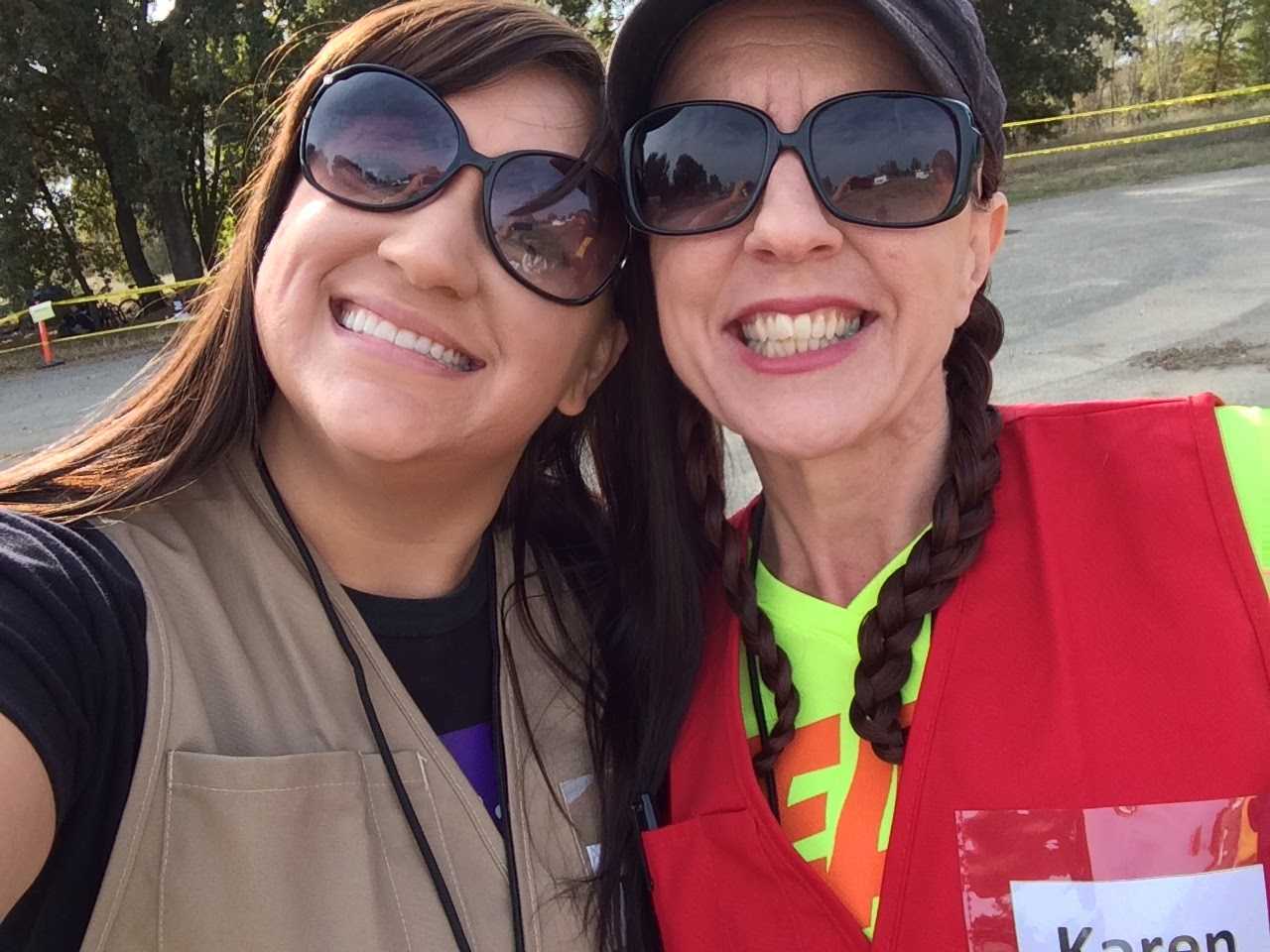
A photo of myself and Karen Larsen at the project site.
Addressing this very complicated community challenge required collaboration, persistence, and patience. It was a stunning example of how a project can be flawlessly implemented when the right people, equipped with the right resources, guided by the right data are brought to the table from the beginning.
So, using this project as an example, here’s a breakdown of what’s needed to see an idea or policy come to life and truly make a difference for the people it serves.
The Right People
Good implementation starts with having the right people at the table.
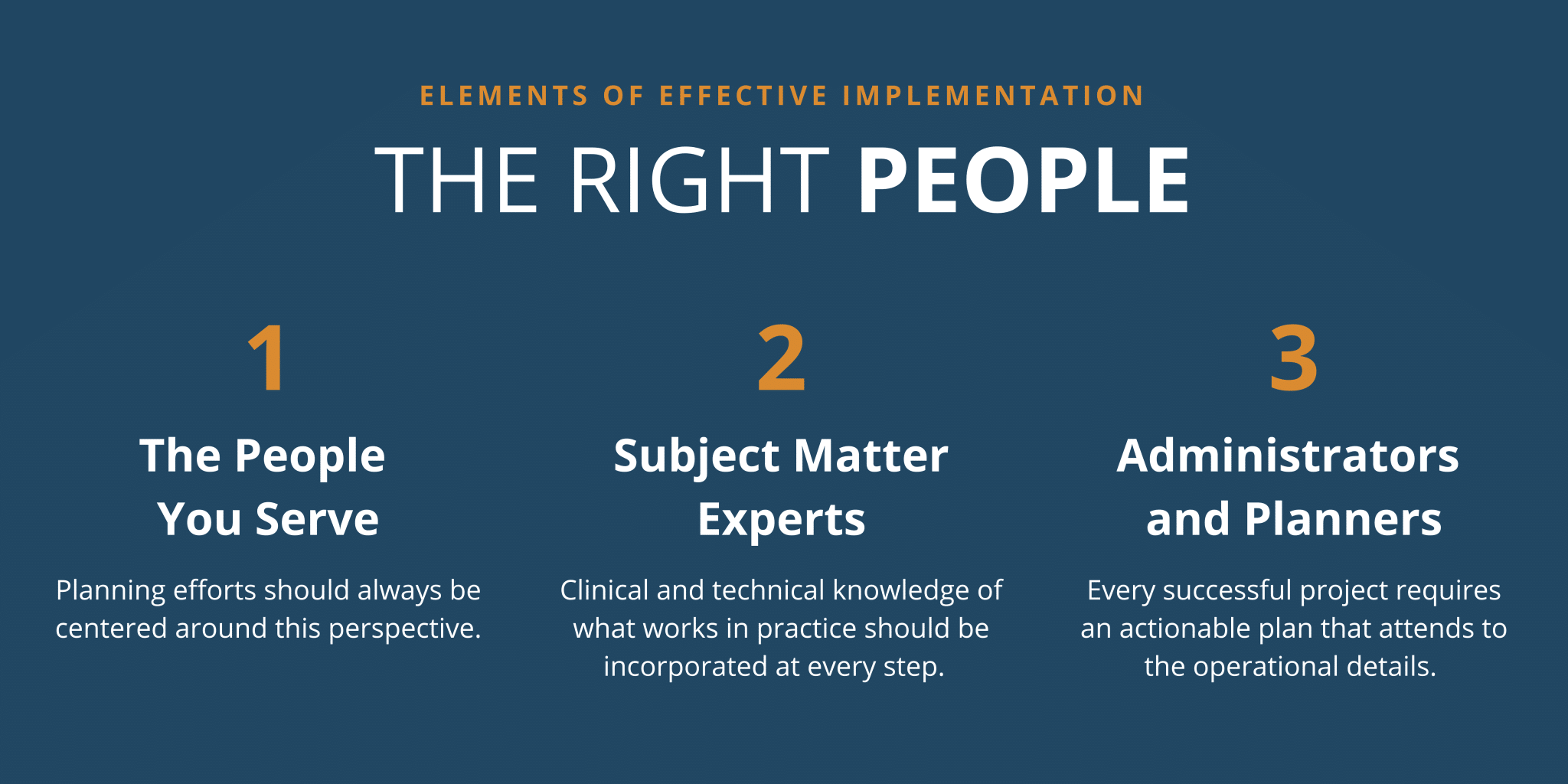
In the riverbank encampment relocation project, engaging the right people started at inception and continued throughout implementation. One of the first steps was to create an assessment team to understand the needs of the people living in the encampment. Our team was on-site at the encampment almost daily, building relationships with community leaders, speaking with every single resident, and assessing their needs.
The feedback and wishes from the residents impacted the decisions we made, both big and small. For example, using Housing First and Harm Reduction models in our temporary housing (big decisions). And while including a groomer and a vet technician during our move day activities might seem like no big deal, for the residents, it was a top priority. Their animals meant so much to them. It was a good reminder to the team of the importance of putting people first.
The Right Resources
Even the best ideas can fail to launch without the right resources behind them.
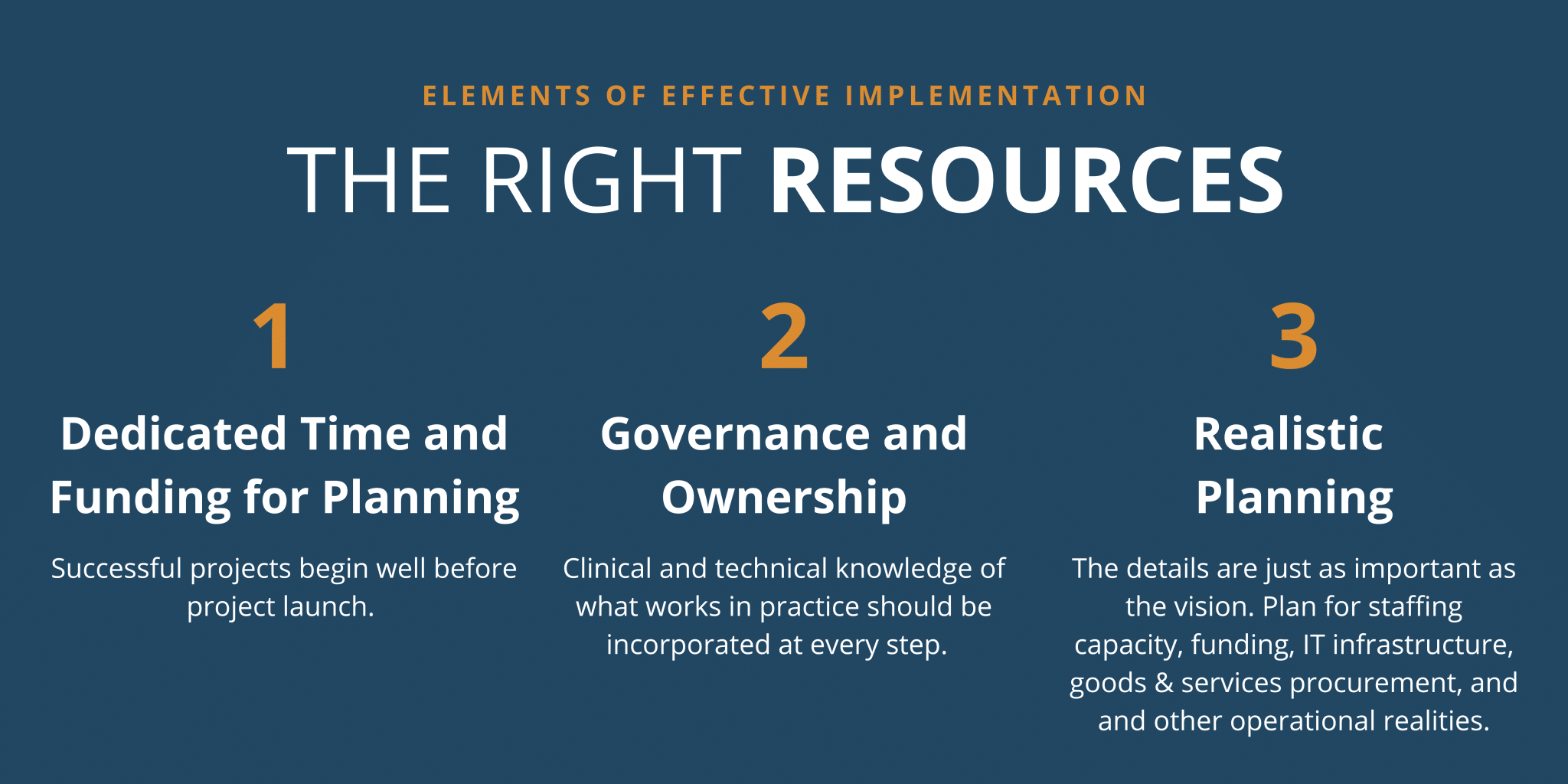
Key stakeholders remained heavily involved throughout this housing project—our County Board of Supervisors, City Council, County Administrator, City Manager, and Behavioral Health Director—and received regular reports during public meetings.
The two local governments involved created a joint budget, approved a project timeline with lead-up time for planning, and authorized staff from most government departments—including health and human services, police, public works, finance, procurement—to participate.
The Right Data
The right data guides decisions in real time, shifting implementation from a static plan to a responsive process.

After moving residents into the motel for temporary housing, the project team heavily focused on retention. After several days of reviewing our daily retention numbers, we noticed a trend. When people left our temporary housing, it was most commonly due to substance use challenges. The data identified a challenge. We looked inward to find the solution. We realized that while we had many mental health-focused providers on the team, we lacked expertise and resources in the harm reduction model we intended to use. As a result, the project team immediately shifted resources and engaged a provider with the right expertise to address this concern.
From policy to practice
Taken together, the right people, the right resources, and the right data are what turn policy vision into lasting change. As we lean into California’s historic investments in behavioral health, strong implementation is an important part of protecting the progress we’ve made. By building on policy wins, centering lived experience, resourcing the work realistically, and using data to guide decisions and ensure accountability, we can develop systems that endure through leadership transitions and changing priorities. Along the riverbank, and across the state, our fellow Californians are counting on us.